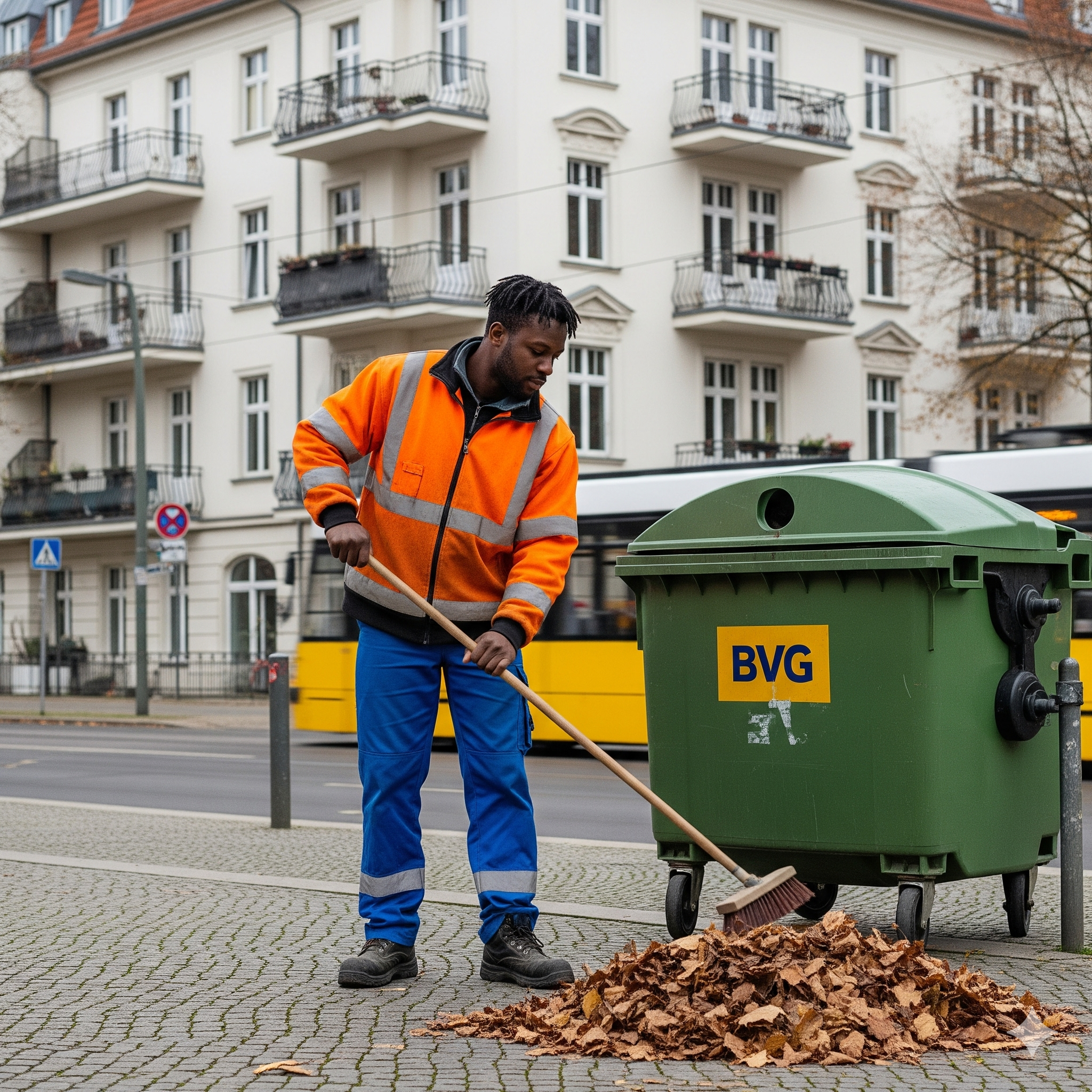
This is a critical topic, and it requires a careful explanation of the difference between unskilled work and the new German visa pathways. Germany’s immigration law is primarily designed to attract skilled workers—those with a university degree or recognized vocational training.
For an African audience seeking employment, it is important to be realistic about the term “free visa sponsorship” for completely unskilled work.
Reality Check: Unskilled Jobs in Germany with Visa Sponsorship
If you are a Nigerian or African national without a university degree or formally recognized vocational training, the traditional visa route for long-term work in Germany (the Skilled Worker Visa or EU Blue Card) is closed to you.
However, recent changes to German immigration law—specifically the introduction of the Opportunity Card (Chancenkarte)—have created a legitimate pathway to finding unskilled or low-skilled work and securing a long-term residence permit.
Here is the step-by-step guide to working in Germany without a formal, recognized qualification:
1. The Game Changer: The Opportunity Card (Chancenkarte)
This is the best and newest pathway for foreigners without a recognized degree or job offer. It is a one-year residence permit that allows you to move to Germany and look for work locally.
How Unskilled Workers Qualify (The Points System):
If you do not have a German-recognized qualification, you must score a minimum of 6 points based on the criteria below.3 This is where your existing experience and language skills come in.
| Criteria | Points Awarded | What You Need |
| Basic Requirement | (Mandatory) | Proof of a foreign professional qualification (recognized in your country) OR a foreign university degree PLUS Basic German (A1) or Fluent English (B2). |
| Qualification Recognition | 4 Points | Partial Recognition of your foreign professional qualification in Germany (e.g., if you started the recognition process). |
| Professional Experience | 3 Points | 5 years of relevant professional experience within the last 7 years. |
| Language Skills | 2 or 3 Points | 3 Points: German B2 Level / 2 Points: German B1 Level. |
| Age | 2 Points | Not older than 35 years old. |
| Other Links | 1 Point each | German A2 Level, Very Good English (C1), previous legal stay in Germany (6+ months), or a partner who also qualifies. |
Key takeaway: If you have 5 years of work experience (3 points), are under 35 (2 points), and have Basic German A2 (1 point), you already hit the 6-point minimum and can apply for the visa to enter Germany and look for a job.
What the Opportunity Card Allows You to Do:
-
Enter Germany: Live in Germany for up to one year to find a job.4
-
Work Part-Time: You are allowed to work up to 20 hours per week (e.g., in a cleaning, retail, or hospitality role) to support yourself while searching for a full-time, long-term job.5
-
Trial Work: You can take up short-term, full-time trial jobs for up to two weeks.6
The €150,000 Elite Jobs in Germany with Visa Sponsorship for Africans
2. The Unskilled Jobs That Will Secure Your Long-Term Permit
Once you are in Germany on the Opportunity Card, you must find a job that will allow you to switch to a long-term residence permit.
The goal is to find a job that pays well above the German minimum wage and is in a high-demand sector.
| Industry Sector | High-Demand Unskilled/Low-Skilled Roles | Typical Monthly Gross Salary (€) |
| Logistics & Warehousing | Warehouse Worker, Picker, Packer, Forklift Driver. | €2,000 – €2,800 |
| Care Support | Caregiver Assistant, Elder Care Support (non-medical). | €2,200 – €3,200 |
| Construction | Construction Helper, General Laborer ($\text{Bauhelfer}$). | €2,200 – €3,000 |
| Transport | Delivery Driver, Truck Driver (with license). | €2,500 – €3,500 |
| Cleaning | Industrial Cleaner, Specialized Cleaner (e.g., factory). | €1,800 – €2,600 |
3. Securing “Free Visa Sponsorship” (Long-Term Permit)
When you secure a full-time job contract while on the Opportunity Card, the employer provides the “sponsorship” by signing the contract. The German authorities then use that contract to grant you a residence permit for the purpose of employment.
The job must meet certain conditions:
-
Job Relevance: The job must be related to your existing qualifications or professional experience (even if those are not fully recognized in Germany).
-
Collective Agreement: If the job is covered by a union’s Collective Wage Agreement , the wage is automatically considered fair and the permit is more likely to be granted.
-
No “Auxiliary” Tasks: The job should generally not be classified as simple “auxiliary tasks” (basic manual labor with zero skill requirement), although the Chancenkarte opens doors even here, provided you switch to a permanent residence permit soon after.
IMPORTANT: Cost and Livelihood Security
While the visa application process is free from the employer’s side, you must show proof that you can support yourself for the one-year duration of the Opportunity Card while you look for work.
-
Proof of Funds: You typically need to deposit funds into a blocked bank account to cover your living expenses for one year.10 The amount required is approximately €12,336 (as of 2025).
-
Health Insurance: You must purchase mandatory German health insurance for your stay.
The Opportunity Card is your direct investment in your German future. It removes the barrier of finding an employer willing to hire you from Nigeria and gives you the crucial time to network and secure a local job offer.13