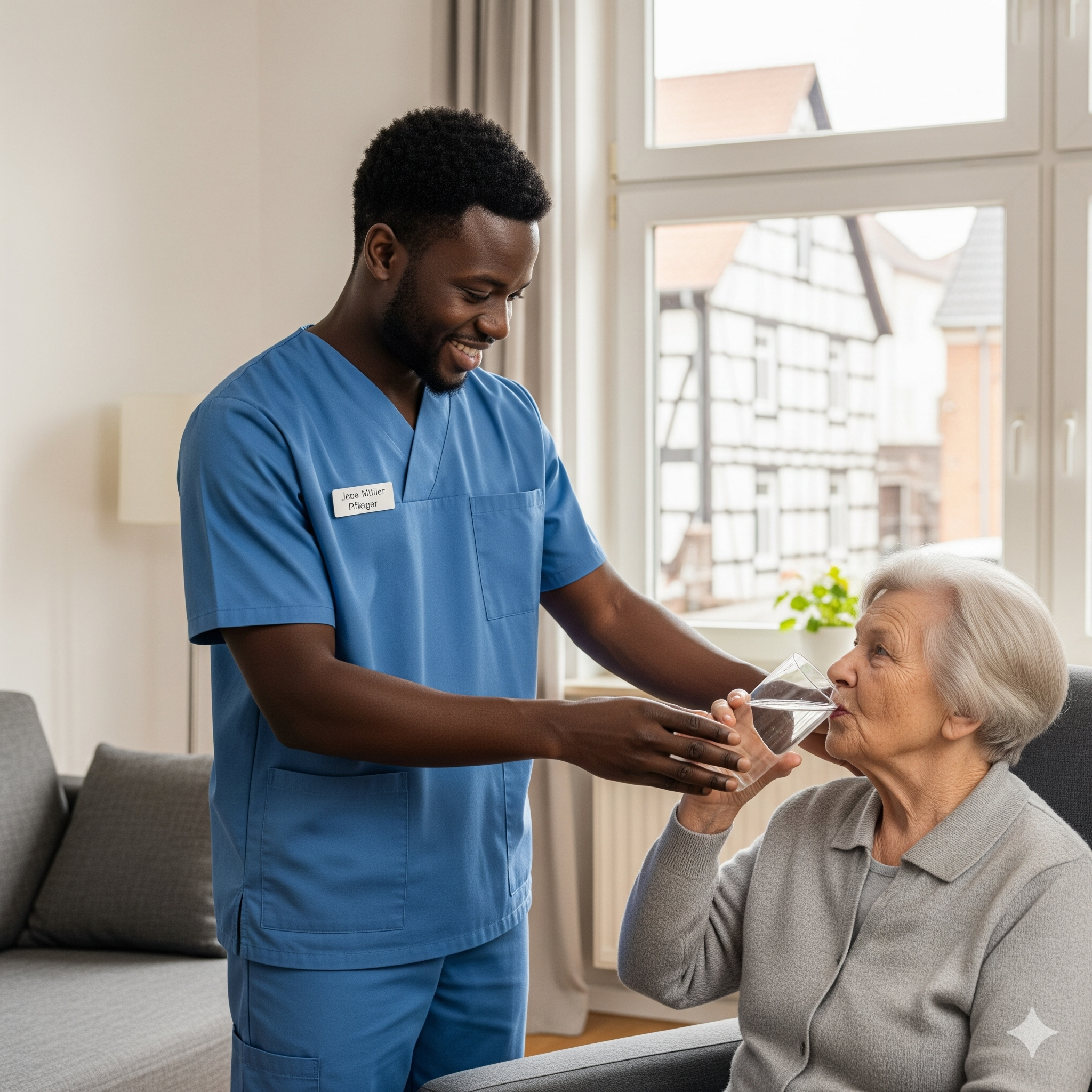
Caregiving in Germany: High Demand, High Requirement
Germany is facing a severe shortage of care professionals due to its aging population.1 This has created a structured, government-backed pathway to recruit foreign workers, including Nigerians, for roles in healthcare.2
The €150,000 Elite Jobs in Germany with Visa Sponsorship for Africans
The term “Caregiver” in Germany is split into three main categories, each with different qualification and visa requirements:
1. The Gold Standard: Registered Nurse
This is the highest-paying and most secure role. It requires a formal nursing degree (like B.Sc. Nursing or a Nursing Diploma from Nigeria).
-
Role: Providing direct, skilled patient care, administering medication, managing medical records, and collaborating with doctors.
-
Salary: Starting gross salary typically ranges from €3,000 to €4,000+ per month (approx.€36,000 to €48,000 annually).
-
Visa Pathway: Skilled Worker Visa (AufenthG) or EU Blue Card (if the salary threshold is met).
-
The Catch: Your Nigerian qualification must be fully recognised as equivalent to the German standard, which requires German B2 Language Certification (Mandatory for licensing).
2. The Fastest Route: Nursing Vocational Training
This pathway is excellent for those who are young, willing to learn, and do not have a nursing degree. Germany will pay you to train for three years.
-
Role: Trainee nurse. You work in hospitals/care homes while attending vocational school.
-
Salary: Paid Apprenticeship! You earn a monthly gross salary while training, typically between €1,100 and €1,550 per month.8 After three years, you become a fully certified nurse and earn the high starting salary listed above.
-
Visa Pathway: Trainee/Apprenticeship Visa.
-
The Catch: Requires German B1/B2 Language Certification before you can start the program.9
3. The Alternative: Care Assistant / Live-in Caregiver
This is a lower-level role, often referred to as a “Caregiver” or “Care Assistant,” focusing on support tasks rather than complex medical care.
-
Role: Assisting the elderly with daily activities, cleaning, cooking, and companionship.10 Medical tasks are typically handled by licensed nurses.
-
Salary: Generally lower, ranging from €1,800 to €2,600 gross per month. Some arrangements by foreign agencies (like those in Eastern Europe) offer lower net salaries but include free food and accommodation (see warning below).
-
Visa Pathway: Skilled Worker Visa (if your assistant qualification is recognized) or the Opportunity Card pathway (to search locally).
-
The Catch: Requires at least German A2/B1 for communication.
🔑 The Non-Negotiable Requirement: German Language
For all legitimate, long-term care roles in Germany, German language proficiency is mandatory. This is not a preference; it is a legal requirement because you will be dealing with patients, safety instructions, and medical documentation.
| Job Role | Required German Level | Time to Achieve (Approx.) |
| Registered Nurse | B2 (Mandatory for licensing) | 9–12 months of intensive study. |
| Nursing Trainee | B1/B2 (Mandatory for admission) | 6–9 months of intensive study. |
| Care Assistant | A2/B1 (Minimum for communication) | 3–6 months of intensive study. |
Action: If you are serious about caregiving in Germany, your first and most important investment is to enroll in an accredited German language course immediately and aim for the B1 or B2 Certificate (Goethe, telc, or ÖSD).11
The “Free Visa Sponsorship” Pathway (How It Works)
In Germany, “sponsorship” means the employer actively facilitates your visa process. Because care professions are in a critical shortage, the government has created a fast-track system:
-
Get the Job Offer: Healthcare providers (hospitals, care homes) are desperate for staff and are highly willing to sign an employment contract or contract with qualified candidates (who have the required German certificate).
-
The Fast Track Procedure: Your employer can apply for the “Accelerated Skilled Worker Procedure” on your behalf at the Foreigners’ Authority in Germany.12 This speeds up the recognition and visa process significantly.
-
The Visa: Once your qualification is assessed (even if only partially recognized) and you have the contract and B2 German certificate, the embassy is mandated to issue your visa quickly.
The “Free” Part: The employer typically covers the cost of the Accelerated Procedure fees and sometimes offers full relocation packages, including flight tickets, initial accommodation, and help with official registration.
⚠️ Warning Against Scams
Be extremely cautious of agencies that promise high-paying, visa-sponsored caregiver jobs without requiring a B1 or B2 German certificate. These are often scams, or they might put you on a short-term, low-paying contract through another EU country (like Poland or Slovakia) which offers little long-term security in Germany. For a permanent, legal, high-paying future in German healthcare, the B2 German certificate is non-negotiable.